
Faith · the exhibition
The stories behind the portraits
Fifteen monks of Worth Abbey, photographed for Faith: Encounters with Spiritual Journeys. Each man’s story follows his portrait, in the words he has agreed. More are added as the project grows.
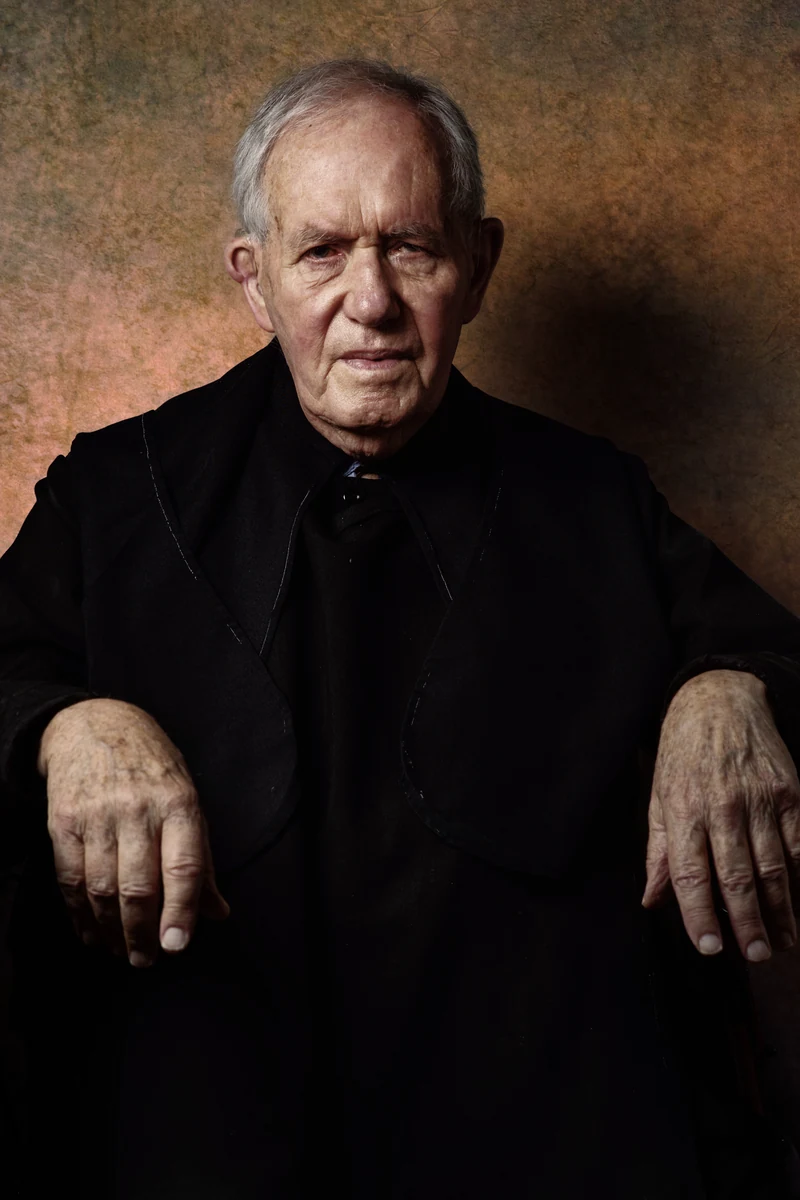
01
Fr Philip Gaisford
Fr Philip’s journey of faith and eventual transition to becoming a Benedictine monk is a profound story shaped by his family heritage, international experiences, and a deep connection to music and education. His path was not one of a sudden revelation but rather a gradual realisation of his calling, influenced by the spiritual environment surrounding him from an early age.
Born in 1935 into a family with a rich and diverse history, Fr Philip’s roots stretch from India, where his great-grandfather was involved, to Rhodesia (modern-day Zimbabwe), where his father built a career before settling in England. His father’s journey was marked by profound changes, including a conversion to Catholicism, which would later have a significant influence on Fr Philip’s own spiritual development.
Fr Philip also found inspiration in his older brother, who had embraced monastic life at Downside Abbey. “Having a brother who was a monk was quite an extraordinary sort of background to have” he says. Watching his brother’s journey deepened his connection to the monastic community and planted the seeds of his future vocation. However, it was a journey marked by contemplation rather than haste.
Fr Philip’s academic journey took him across prestigious institutions and countries. He pursued studies at both Cambridge and in Switzerland, places that not only deepened his intellectual understanding but also exposed him to diverse cultural and spiritual environments. Fr Philip also studied at the Rhodesian Music Academy where he says he received excellent training.
Music played a crucial role in Fr Philip’s life as it intertwined with his religious journey and became a central part of his monastic existence: Organist, Choirmaster and the Head of Music at Worth School for many years.
Despite a fulfilling life, including work in Rhodesia and time spent in Malawi, Fr Philip found himself increasingly drawn to the monastic life. His dissatisfaction with his worldly work and a deepening interest in faith eventually led him to make the decision to join the monastic community.
The move was transformative. He found in monasticism not only a sense of peace but also a deep sense of purpose. The importance of community, a cornerstone of monastic life, became central to his daily existence, providing both comfort and spiritual sustenance.
Fr Philip’s monastic calling took him across continents. He traveled to Africa and America, offering his assistance to monasteries in developing regions. These experiences exposed him to the differences in monastic practices worldwide, allowing him to witness firsthand the challenges faced by communities across different cultures.
Throughout his life, Fr Philip has maintained a clear vision for the future of faith. He reflects on the importance of “a clear sense of vision” and hard work within the monastic community, emphasising that these values have been essential to his own spiritual journey but also Worth Abbey and Worth School. He sees these qualities as crucial for the future, particularly for young people considering a monastic life.
“Having a brother who was a monk was quite an extraordinary sort of background to have”
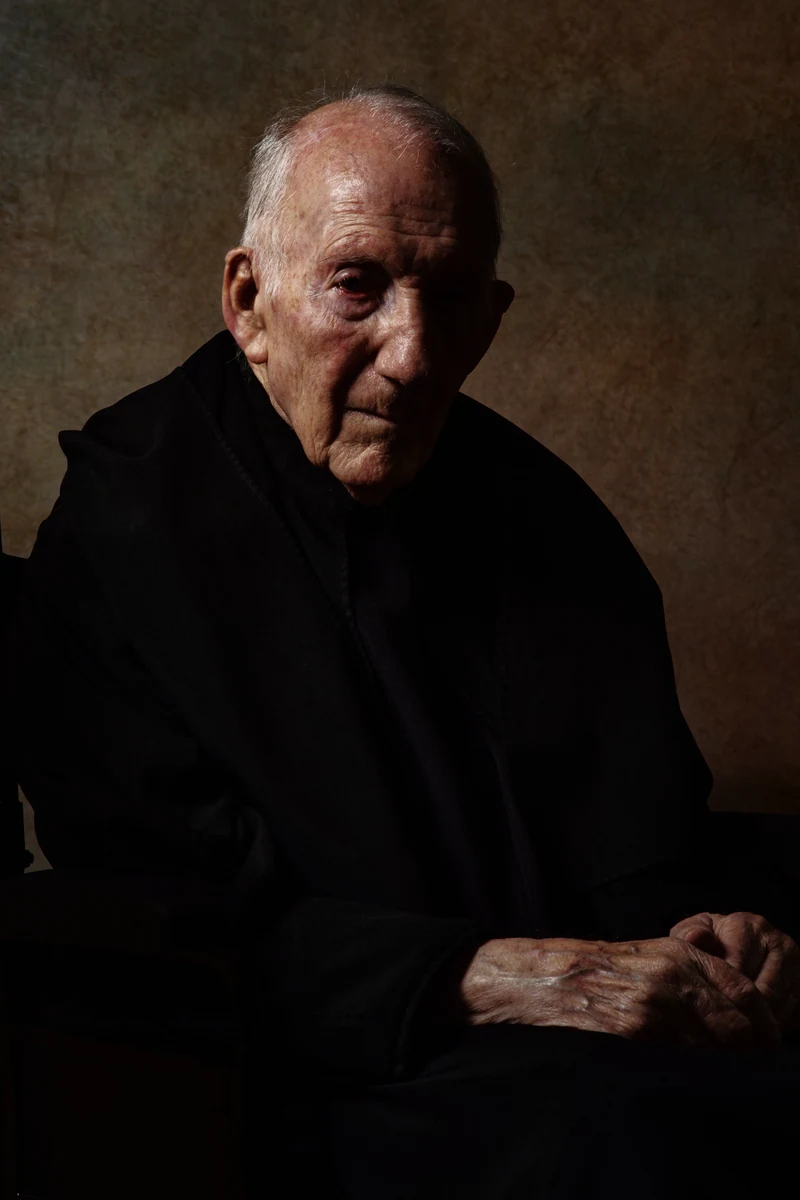
02
Fr Kevin Taggart
Fr Kevin, a Benedictine monk, was born in 1931, a time that would shape his faith and future vocation. Raised in a devout Catholic family, he grew up in Kent and Somerset, where his education under the Benedictines at Downside Abbey would lay the foundation for his monastic journey. His childhood and early adolescence were marked by the trials of living through the Battle of Britain during World War II, an experience that deepened his sense of faith and purpose. “We were living with a sense of fear” he recalls.
At the age of 18, in 1949, Fr Kevin made the life-defining decision to join the Benedictine Order. He was profoundly influenced by the community of faith that had surrounded him throughout his upbringing, and he felt a calling to embrace the challenges and responsibilities of monastic life. The decision was not made in isolation—Fr Kevin recalls the influence of Father Charles, a fellow Benedictine who made a similar decision around the same time. Their shared commitment to the monastic life created a bond that would strengthen Fr Kevin’s sense of vocation.
For three-quarters of a century, Fr Kevin's life has been shaped by the Rule of St. Benedict, a 6th-century text that forms the spiritual and practical framework for Benedictine monks. This ancient rule governs everything from the rhythm of prayer to the structure of community life. “The Rule provided me with a framework for living a disciplined and meaningful life” he says.
A handwritten version of the Rule is kept in the monastery’s calefactory. The monks’ favourite passages are distinguished in red calligraphy.
When asked how faith has influenced his life, Fr Kevin finds it difficult to imagine any other path. A life of prayer, work, and community has shaped him in ways that extend beyond his individual identity. He often reflects on how the sense of community and shared vision among the monks inspires vocations, much like it did for him when he was young
In addition to his life within the monastic walls, Fr Kevin has also engaged with the world outside the abbey. He was featured in a documentary filmed at Worth Abbey in the early 2000s, where five men lived alongside the monks for 40 days. The experience allowed viewers to witness the transformative power of monastic life, and Fr Kevin was a key figure in sharing the wisdom of his years with the participants.
As Fr. Kevin reflects on his life, he expresses gratitude for the opportunities he has had to serve God and his community. His dedication to the Benedictine tradition serves as an inspiration to others who may be considering a similar path.
“We were living with a sense of fear”
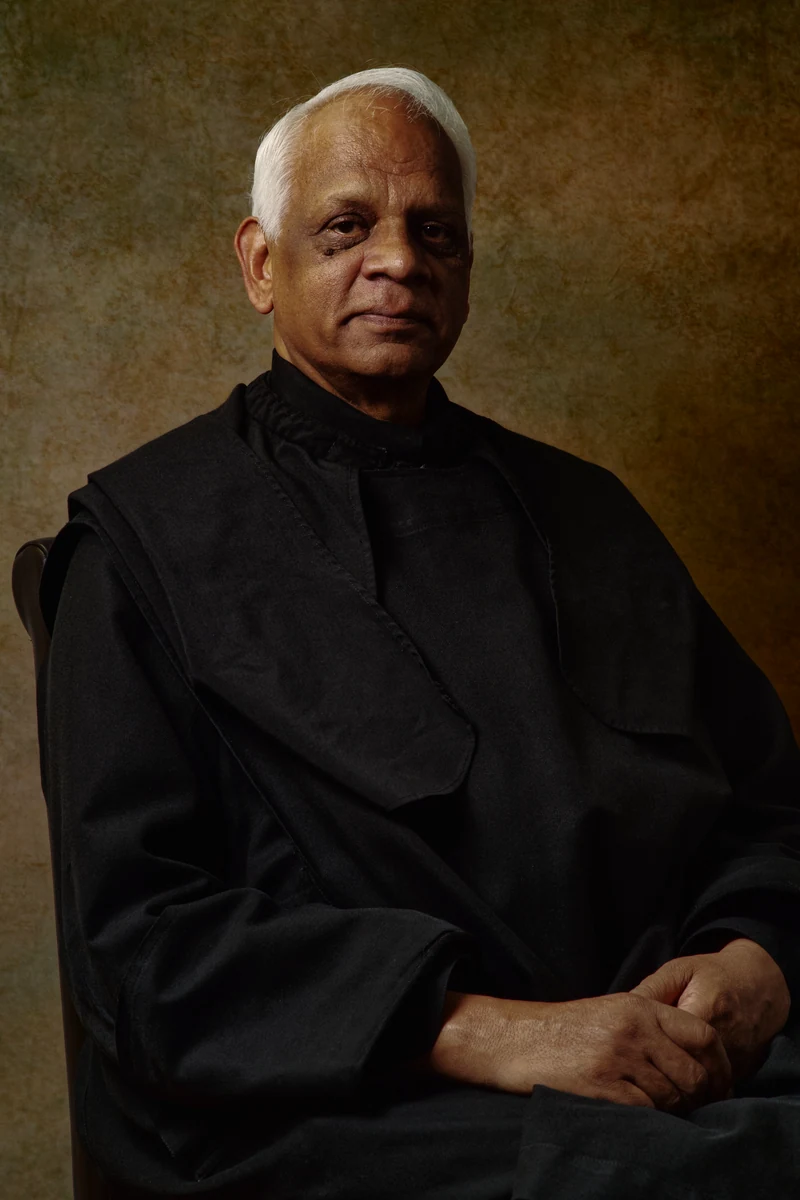
03
Fr Alex
Fr. Alex was born into a deeply religious family and raised in a Goan community in India. His upbringing was steeped in Catholic practice but it was not until much later in life, after a transformative retreat at Worth Abbey, that he would explore his faith further.
He initially embarked on a path toward a career in physics, driven by a desire to understand the fundamental nature of reality. The overall answer he was seeking was to find a way to reconcile his scientific mindset with his deep religious faith.
He attended Imperial College London in the 1970s, a time of significant cultural and value shifts in British society.
“This really tested my faith” he explained.
Amid this rapidly changing environment, he maintained his religious practices, being one of the few in his peer group with a strong sense of faith. His academic journey was not without challenges; he worked during holidays to support himself financially, balancing the rigours of study with the demands of daily life.
The pivotal moment in his spiritual journey came during a retreat at Worth Abbey, where he experienced a profound sense of belonging.
“I had an extraordinary feeling. I felt I'm at home”
Soon after, his encounter with a monk praying in Hebrew (a language the monk didn’t know) revealed to him the reality of metaphysical truths that went beyond the physical world he had studied. This experience sparked a desire to explore faith more deeply.
He made the decision to spend a life of service, leading him to spend a year in the monastic community. During this time, he taught mathematics at Worth School and immersed himself in the discipline of communal living, which ultimately solidified his decision to embrace the monastic vocation.
Fr. Alex reflects that his monastic life has been deeply shaped by both personal prayer and the structured rhythm of communal prayer. It was through these practices that he found the strength to face the challenges of monastic living.
Fr. Alex’s intellectual curiosity did not end with his decision to enter the monastery. He pursued further studies in philosophy, theology, and social sciences, seeking to deepen his understanding of the nature of faith and its implications for daily life. His training in Jungian analysis and Gestalt therapy also informed his perspective on the relationship between the mind, body, and spirit in healing, helping him recognise the spiritual dimensions of many physical and psychological problems.
A key element of his faith is his belief in the power of prayer to heal and transform lives. He discusses the need to approach different audiences—those within the faith community and those outside it— with language and concepts that resonate with their experiences. For Fr. Alex, this sensitivity is vital in ministering to people in today’s diverse and complex world.
One of the guiding principles in Fr. Alex’s life is rooted in the biblical text of Micah 6:8, which calls believers to "act justly, love tenderly, and walk humbly with God." This verse encapsulates his approach to faith: seeking truth, living with integrity, and maintaining a posture of humility before God.
Fr. Alex’s story is one of intellectual and spiritual convergence, marked by a desire to serve both God and humanity
“I had an extraordinary feeling. I felt I'm at home”
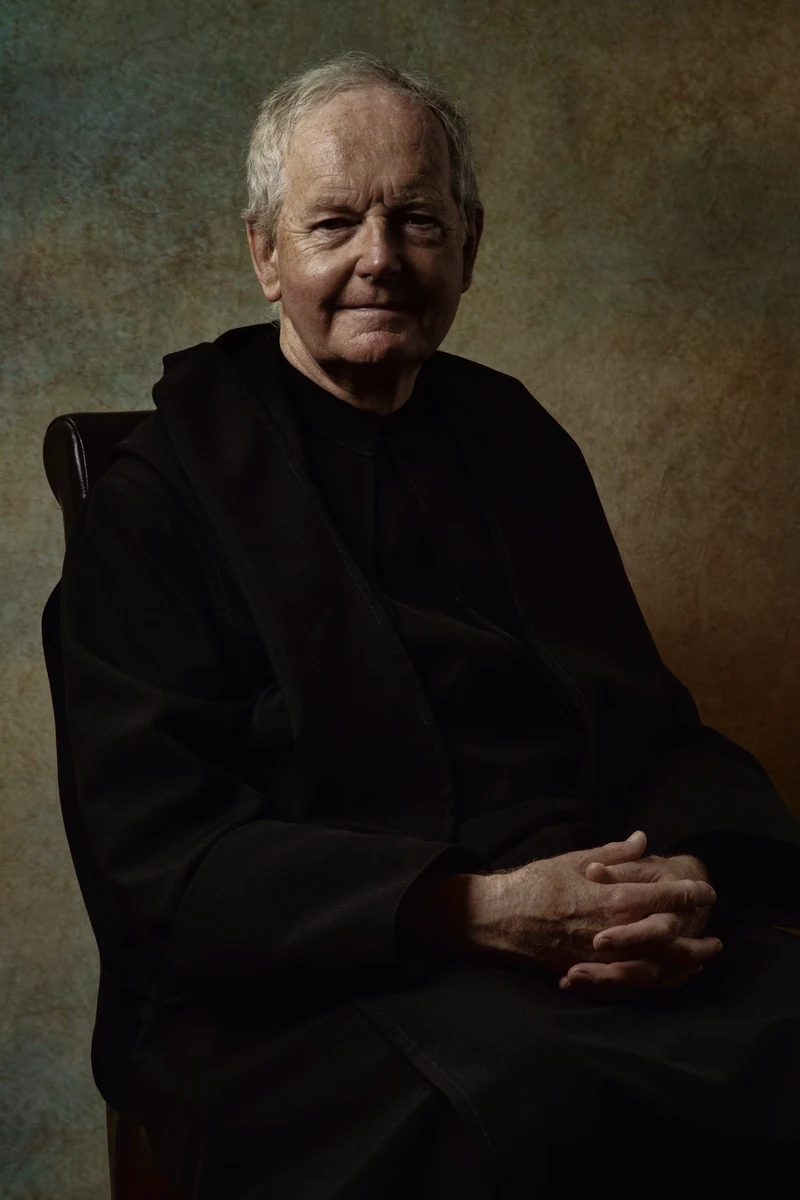
04
Fr Paul Fleetwood
Fr Paul’s journey to monastic life began with a gradual calling during his early adolescence, deeply influenced by great and friendly chaplains at his Catholic school. Born with a sense of faith, he recalls becoming aware of his vocation between the ages of 11 and 13. “I had a notion that he might like to be a priest” he says
It wasn’t until his early 20s that he fully embraced this path.After completing his university studies, he took the decisive step of joining the monastery in 1974 at the age of 22. Fr Paul describes this moment as a "plunge into monkhood," an act of faith that would define the rest of his life. He had visited the monastery while still a university student, where he found support and a growing awareness of the depth of his calling. Though he grappled with doubts about whether he could live out the demanding life of a monk, his sense of purpose and desire to dedicate his life to something meaningful ultimately guided him.
During his time at the monastery, he engaged deeply with those on the margins of society. After university, he worked closely with homeless men in a shelter, an experience that reinforced his desire to help those in need. His passion for missionary work later took him to South America, where he served in both Peru and Brazil. In Brazil, Fr Paul worked with the Landless Movement (MST), an organisation of small farmers advocating for their rights to occupy and cultivate unused, large estates. This movement was often fraught with tension and conflict with landowners, but Fr Paul played a role in supporting these vulnerable communities. The time he spent in Brazil left a lasting impression, deepening his understanding of faith’s role in social justice and the importance of standing with the oppressed.
"I think I was touched by the sense that to some theological terms, God had given me a life for a purpose, and that it was important to use it as well as I could."
Throughout his monastic life, Fr Paul has found great inspiration in the Rule of St. Benedict, particularly the chapter on hospitality. This chapter emphasises the presence of Christ in guests, especially the poor, and underscores the importance of receiving them with special care and attention. For Fr Paul, this teaching has been a guiding principle in his work and in his spiritual life, reminding him always to see the face of Jesus in those he serves.
As Fr Paul reflects on the future of religious life, he predicts that communities of monks in Western Europe will likely become fewer and smaller. However, he remains hopeful and confident that the human instinct to seek God will ensure that faith persists, even in challenging times. For him, the religious life is a natural expression of this instinct, a path that will always resonate with those who are called to live it.
“I had a notion that he might like to be a priest”
05
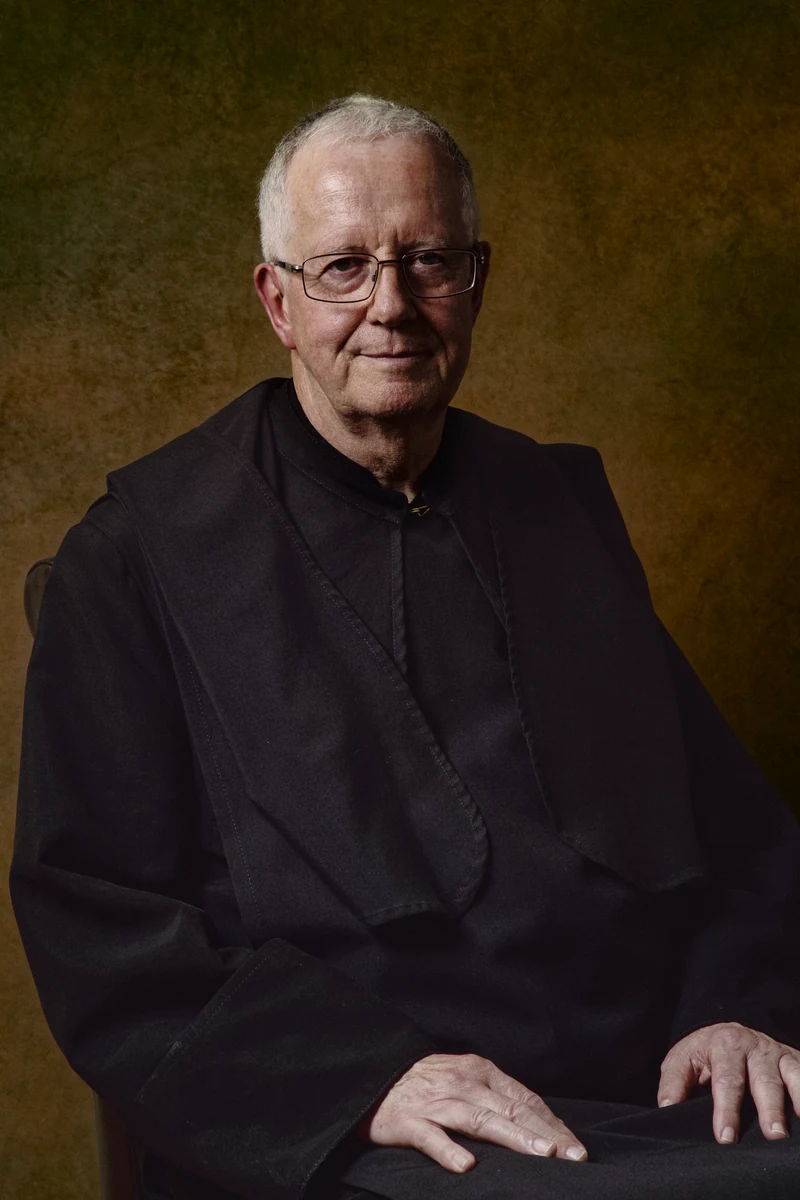
Fr Patrick Fludder
Fr Patrick grew up in a Catholic family in Southern England. His early education in Catholic schools in Sussex didn’t help with his faith and like many young people, he experienced a disconnection from his religious upbringing. During his secondary school years, he was involved with the Air Training Corps gliding school (RAF cadets) every weekend which meant that he wasn’t able to attend the traditional parish mass.
“I loved gliding, but it meant spending the whole weekend and I couldn't get back in time for mass” he recalls.
It wasn’t until his time at university in Southampton that Fr Patrick rediscovered his faith. He accepted an invitation from the Catholic chaplaincy during Freshers Week, which he didn’t enjoy. After that, he attended much more attractive events hosted by the Navigators, an evangelical Christian group. He found these social gatherings, such as volleyball and picnic suppers, more engaging. After nine months of participation, he had a transformative experience, fully accepting Jesus Christ into his life.
“And then after nine months of attending these events, they got to me and I discovered my catholic upbringing began to make sense.”
Fr. Patrick got together with some catholic friends who prayed regularly together. Together they agreed to investigate the vocation to the priesthood and arranged a visit to the Bishop of Portsmouth. Despite their interest, Fr Patrick and his friends found the secular priesthood unappealing. It was following a visit to Worth Abbey at an Easter weekend that Fr. Patrick and his friends felt drawn to the idea of a monastic vocation. It was there that they discussed the project of laypeople living alongside monks in the monastery.
Following this experience, Fr Patrick and his friends were invited to return to Worth Abbey in the university summer break, where they tried out this idea of living together with the monks inside the monastery. That idea later became the Worth Abbey Lay Community which still exists today as the Lay Community of Saint Benedict.
It was during that summer event that Fr. Patrick was invited to join the Worth Community as a novice after completing his university degree.
Fr. Patrick and his friends were attracted to the openness of the monastic community to help all lay people and young people in particular to take their place in the church.
Prayer forms the core of this life, both in communal settings and in the personal prayers that sustain the monks.
While attending a Jesuit college in London, Fr. Patrick contrasts the Benedictine emphasis on community prayer, from which the work or mission flows, with the Jesuit focus on their mission, which is supported by their community and personal prayer. He highlights the Benedictine commitment to shared faith and collective prayer within a close-knit and stable monastic environment.
His monastic studies took him on a sabbatical to Collegeville in Minnesota, where he delved deeper into the Rule of St. Benedict and the rich history of monasticism.
“I learned an awful lot about the rule of Benedict” he recalls.
Fr Patrick also developed a unique spiritual practice he calls "Lectio Divina on the land," in which he connects with God through being in places of spiritual, historical and personal significance. His involvement in and sharing of this spiritual practice during pilgrimages to the Holy Land, and the profound experience of praying in such sacred locations, has enriched his spiritual life.
Fr Patrick’s current responsibilities are the Infirmary, Liturgy, Archives and receiving Guests.
“I loved gliding, but it meant spending the whole weekend and I couldn't get back in time for mass”
06
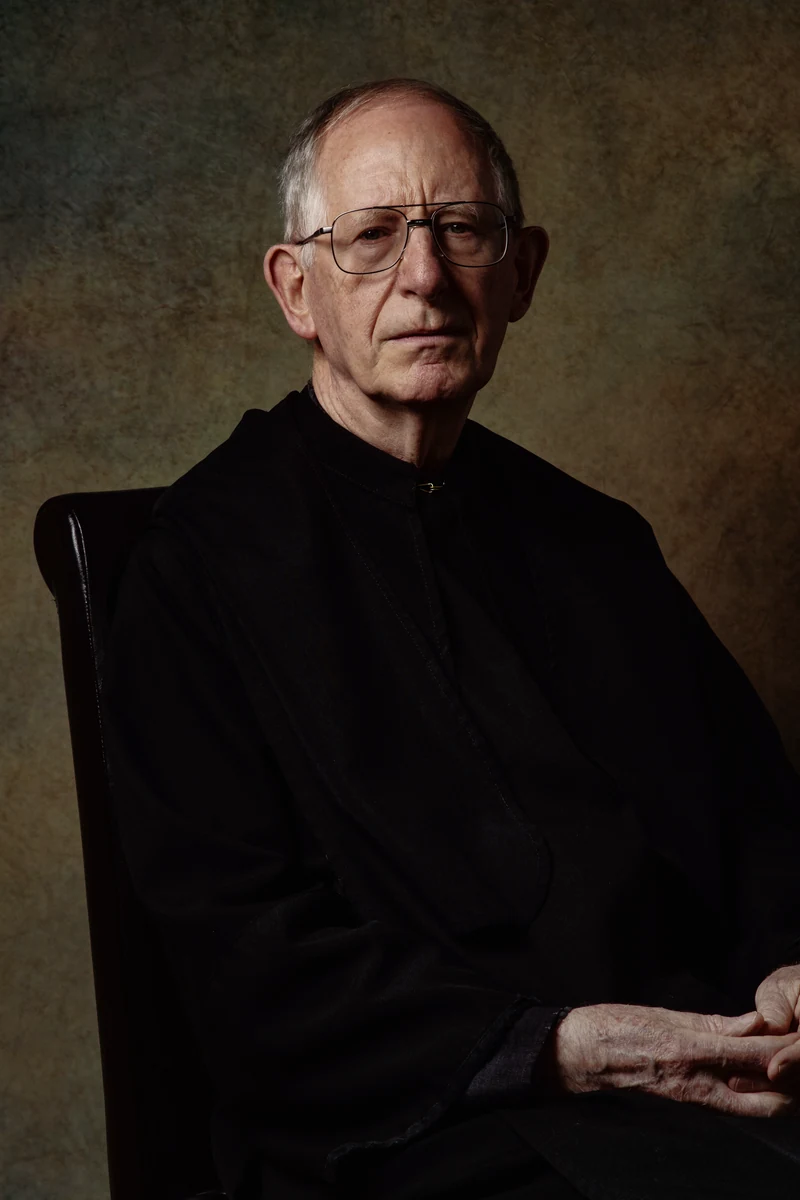
Fr Martin McGee
Fr. Martin’s journey to monastic life came to a head during his time at Durham University in the mid-eighties. Though drawn to monastic life, he had battled with uncertainty about his calling for several years.
“although attracted to monastic life, I lacked a clear sense of where God was calling me.”
That uncertainty ended one Sunday evening when he attended a prayer meeting at a city church. Opening the Bible at random, something he had never done before, he came across Psalm 109: “You are a priest forever after the order of Melchizedek.” These words stunned him, and from that point onward, he knew he should pursue monastic life, thus ending five years of indecision.
“I finally decided to apply to join Worth Abbey as a trainee monk”
Now a monk at Worth Abbey, Fr. Martin lives according to the Rule of St. Benedict, which shapes every aspect of his daily life. Guided by this Rule, the Abbot, and his faith in Christ, he strives to live a life of obedience, community, and prayer. Although he acknowledges that he often falls short of these ideals of Gospel living, he trusts that through perseverance, he will grow in faith, hope and love.
The Rule of St Benedict is optimistic. St Benedict assures his monks that “as we progress in this way of life and in faith, we shall run on the path of God's commandments, our hearts overflowing with the inexpressible delight of love”
Fr. Martin’s faith has, he hopes, helped him grow in self-awareness. He notes that such changes are often easier for others to observe, but he feels he has become less judgmental and more compassionate.
Central to his faith are the Bible and the Rule of St. Benedict, especially St. Paul’s teachings on new life in Christ and the transformative power of the Holy Spirit, which offer him hope and direction.
“The teaching of St Paul on new life in Christ, the transforming power of the Holy Spirit, gives me hope” he reflects.
As he looks to the future, Fr. Martin sees Christianity continuing to decline in an increasingly materialistic culture. However, he believes that monastic life will endure, providing a sanctuary for those seeking to deepen their humanity and relationship with God.
In a world increasingly dominated by digital technology, Fr. Martin sees the monastery as a place where people can reconnect with what it means to be fully human, offering a counterbalance to the dehumanising forces of modern society.
Through his years as a monk, Fr. Martin’s faith has not only shaped his personal growth but has also provided a vision for how monastic life can continue to offer meaning and sanctuary in an evolving world.
“although attracted to monastic life, I lacked a clear sense of where God was calling me.”
07
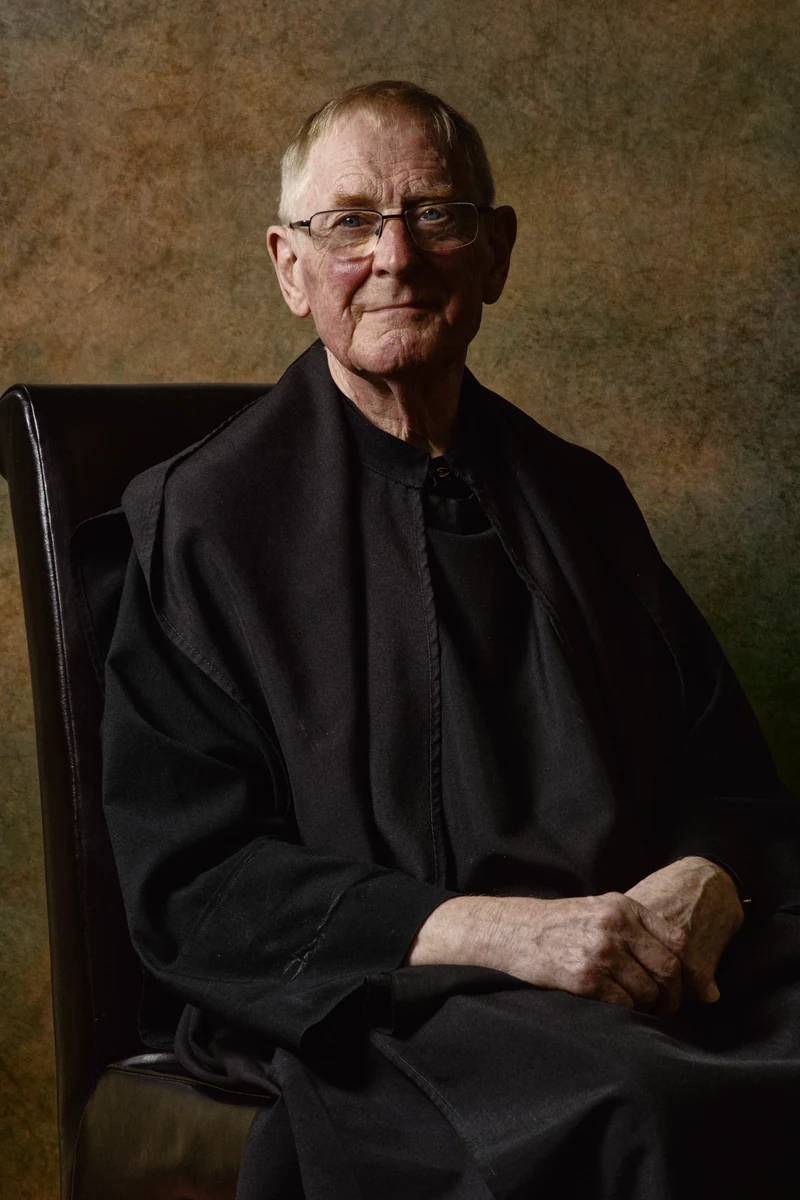
Fr David Jarmy
Fr. David’s journey to monastic life was shaped by a rich and evolving spiritual path, beginning in his childhood within the Anglican Church. Born into a devout family, his sense of vocation was first stirred at the age of eight when he joined the local parish choir.
The beauty of the church music and the ambiance of the services left a lasting impression on him. The biblical story of Samuel’s call in the Old Testament, often read in church, resonated deeply with Fr. David and gave him his first sense of being called to something greater.
“It just communicated to me a great sense of a living tradition of faith. I didn't understand most of the words, but they fascinated me” he reminisced
During his teenage years, a visit to an Anglican monastery further nurtured this calling, offering him a glimpse of the contemplative life. Despite struggling academically due to dyslexia, Fr. David’s love for learning flourished as he worked in local libraries and later in a university bookshop.
These jobs exposed him to a wide range of ideas and people, enriching both his intellect and his faith. His confidence grew, and in time, he decided to pursue ordination in the Anglican Church. Fr. David was ordained in 1976, serving in various parishes, including St. Leonards on Sea and Hastings. He later completed a teaching qualification at Cambridge and spent time teaching religious studies at an Anglican school in Kettering.
Despite enjoying teaching, he felt called to return to parish ministry, leading him to take up a role as an Anglican chaplain near Worth.
However, balancing parish life and family responsibilities began to weigh heavily on him. Fr. David’s marriage and family life, while fulfilling, added complexity to his spiritual journey. Over time, he and his wife separated, which led him to reflect more deeply on his calling. He sought guidance from a spiritual director, who helped him discern his future path. Visits to various Benedictine monasteries solidified his desire for a monastic life, offering him the peace and community he longed for.
In a significant moment of spiritual clarity, Fr. David decided to leave the Anglican Church and enter the Catholic Church. He spent a year in a Catholic parish in Weybridge, where he completed the annulment process. In 2008, he entered the Benedictine community at Worth Abbey, officially beginning his monastic journey. After a period of discernment as a postulant and novice, he made his first profession in 2010 and his solemn profession in 2013, fully committing himself to the Benedictine way of life.
Fr. David was ordained to the priesthood by Bishop Richard Moth on March 22, 2021, a day of special significance as it marks the solemnity of St. Benedict's passing
Reflecting on his path, Fr. David acknowledges the challenges he faced, particularly in balancing family, faith, and his changing sense of vocation. He sees his earlier life, including his time in the Anglican Church and his experience of marriage and fatherhood, as integral to shaping who he is today.
His journey, though marked by twists and turns, has brought him to a place of deep spiritual fulfilment. Fr. David now embraces the rhythm of monastic life, where prayer, community, and reflection are at the heart of his daily existence.
“It just communicated to me a great sense of a living tradition of faith. I didn't understand most of the words, but they fascinated me”
08
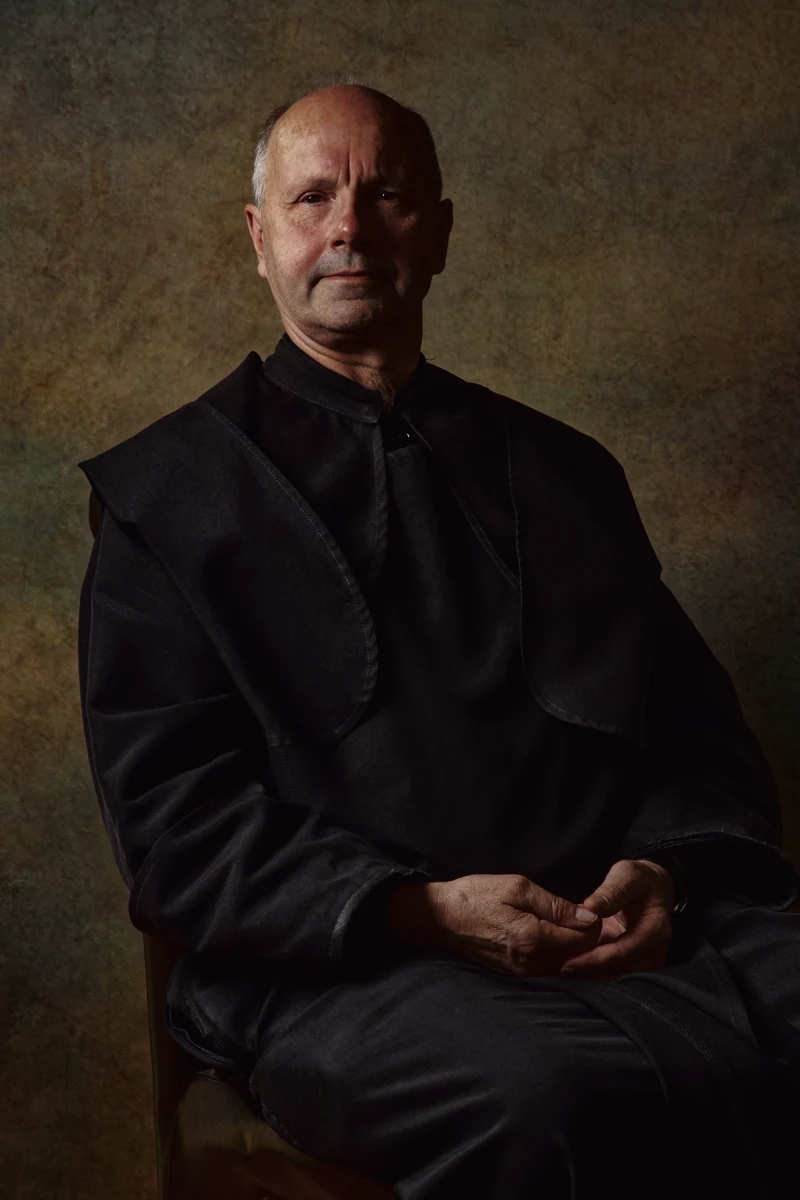
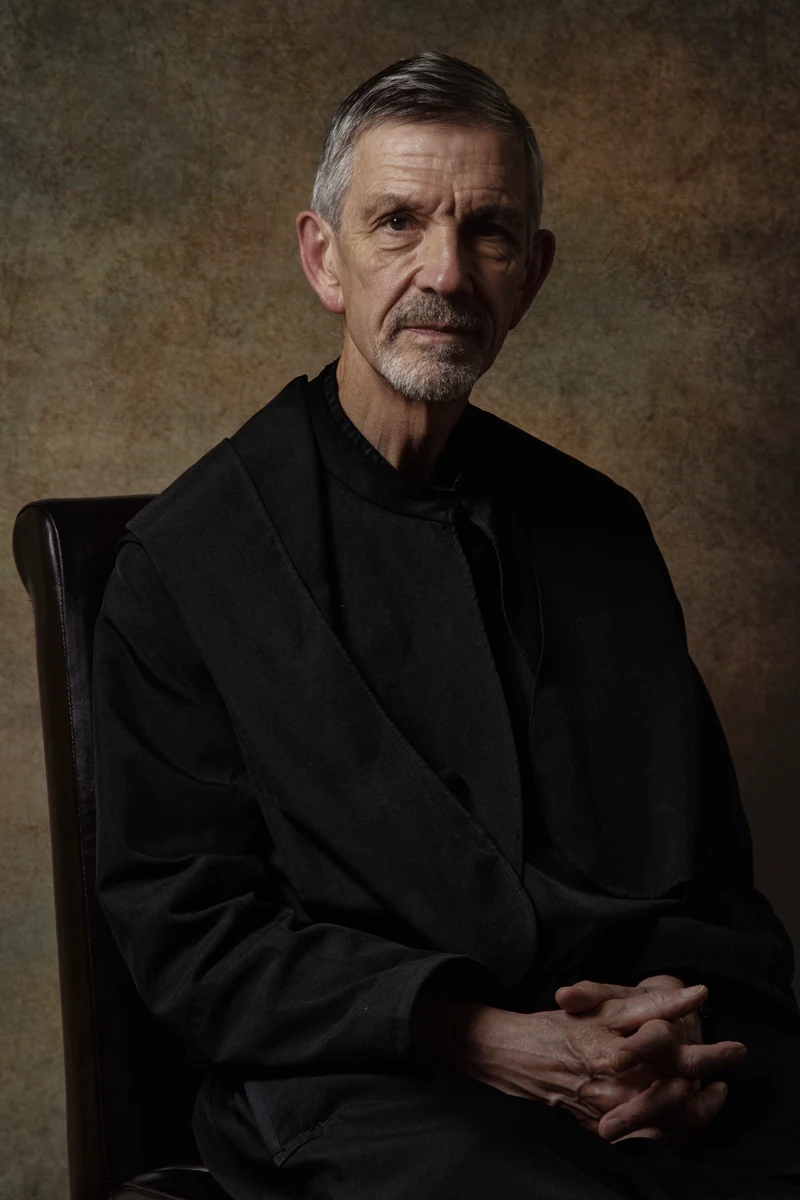
Fr Peter
When Fr Peter left school he joined the Royal Marines for 4 years, he then worked in the wine and spirit trade for 7 years as a salesman before being made redundant.
He then did some travelling, in the Far East he had a spiritual awakening which brought him back to his Catholic faith which he had previously lapsed from. On return to UK, he enrolled on a 2 year HND course at Brighton university hoping to qualify as a computer programmer, during this time he had an even more deeper and profound spiritual experience which he later reflected on, “changed everything”. This experience led him to Christian meditation, a practice that resonated strongly with him and guided him on his path of faith.
After completing his HND, Fr. Peter joined a Christian meditation centre in London for a year. Initially sceptical about monastic life, he soon felt drawn towards it, recognising the deep spiritual connection between meditation and monasticism.After some visits to Worth Abbey he decided to try his vocation, and joined the monastic community in 1994. After completing the novitiate he did more study to be ordained as a priest. He then worked in Worth School for the next 20 years, where he contributed significantly as a chaplain, and also was responsible for the Duke of Edinburgh Award scheme, he also coached the fencing team.Since 2021, Fr.
Peter has managed the Abbey’s retreat centre, where he is responsible for the running of the retreat programme. This includes themed retreats like ‘Finding Stillness’, ‘Tai Chi and Meditation’, as well as guided retreats and seasonal ones during Advent and Lent. On all retreats, the retreatants are encouraged to take time out and to explore and deepen their faith through the Benedictine practices of prayer, reflection, Lectio Divina and meditation.
Fr Peter describes it as the most rewarding role of his monastic life and says, ‘it’s where I live my monastic vocation to the fullest’.
Fr Peter’s other roles in the community are as sacristan and Prior of the community. His journey, from a young man disconnected from his faith to a dedicated priest and retreat leader, reflects his profound spiritual transformation and dedication to helping others explore their own faith journeys.
09
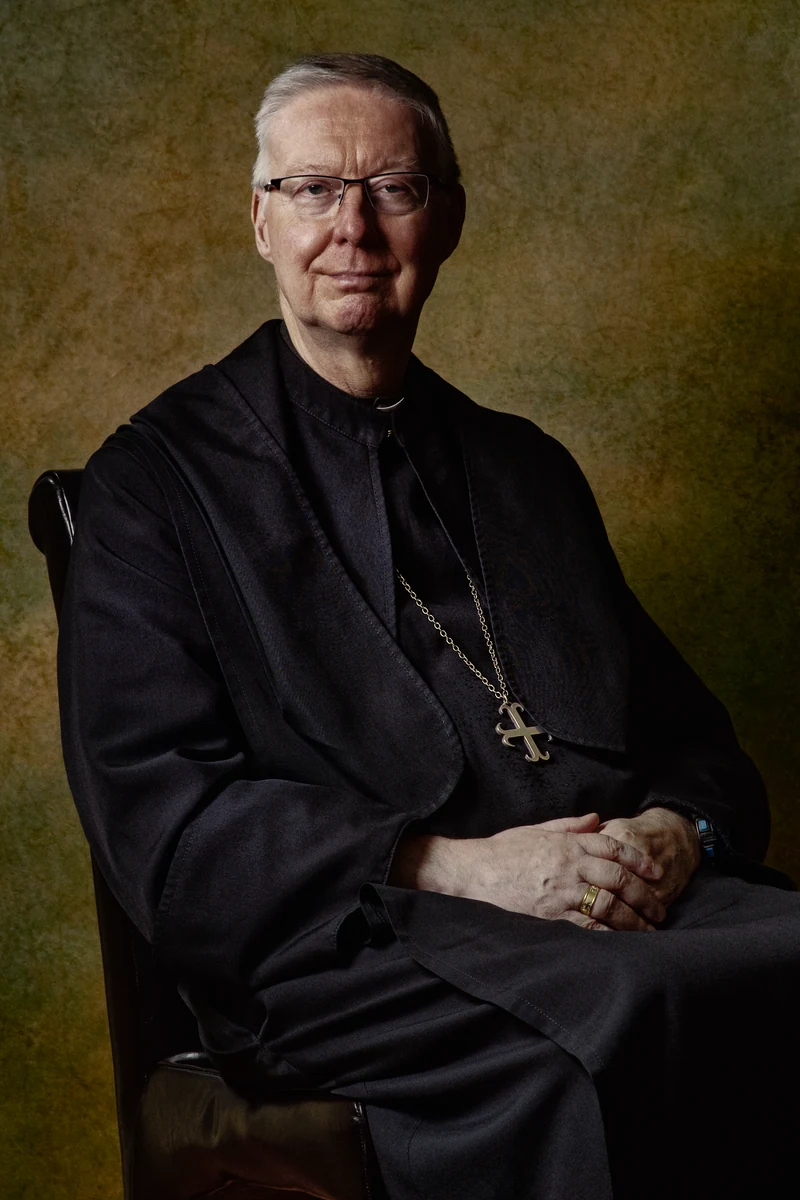
Fr Luke Jolly
Fr. Luke Jolly's journey into monastic life unfolded gradually during his twenties. While he maintained a regular prayer life, it took time for him to discern God's path for him. Initially exploring career and marriage, he ultimately felt called to the monastic way of life, embracing a life centred on prayer, community, and service.
Fr. Luke's faith has shaped his daily life, bringing a sense of peace and clarity to those around him. His ability to offer calm perspectives has helped others navigate their challenges. He values the structured nature of monastic life, which he believes offers stability in a chaotic world, and sees respect as a key element of monastic living, a quality often absent in broader society.
“A guest said recently that monks respect each other: respect was not something he experienced between people generally” he reported.
His faith, which has been a constant throughout his life, has transformed him, helping him find meaning and ward off the despair that the world's darker forces might bring. A passage that deeply resonates with him is, "The time has come, the kingdom of God is close at hand: repent and believe the Good News," a teaching that continues to guide his spiritual journey.
I would say that I have always been a person of faith, but my faith has developed as I have developed humanly.
In 1980, Fr. Luke entered Worth Abbey, where he was later ordained in 1985. He was elected Abbot in 2013, becoming the first former student of Worth School to hold this role. As abbot, he nurtured the monastic community, guided the development of a lay youth ministry team in the School, and established a small monastic community in Brighton.
Over the years, he has served his community in various capacities, including Prior and Novice Master. He is known for his spiritual guidance, including his contributions to the BBC series "The Monastery" and his involvement in the Compass programme, which helped young Catholics discern their vocation.
His interests range from walking in the countryside to medieval Suffolk churches and supporting Ipswich Town F.C.
As the world goes through a change of era, he believes the joyful living of faith will continue to be a blessing for the world.
“A guest said recently that monks respect each other: respect was not something he experienced between people generally”
10
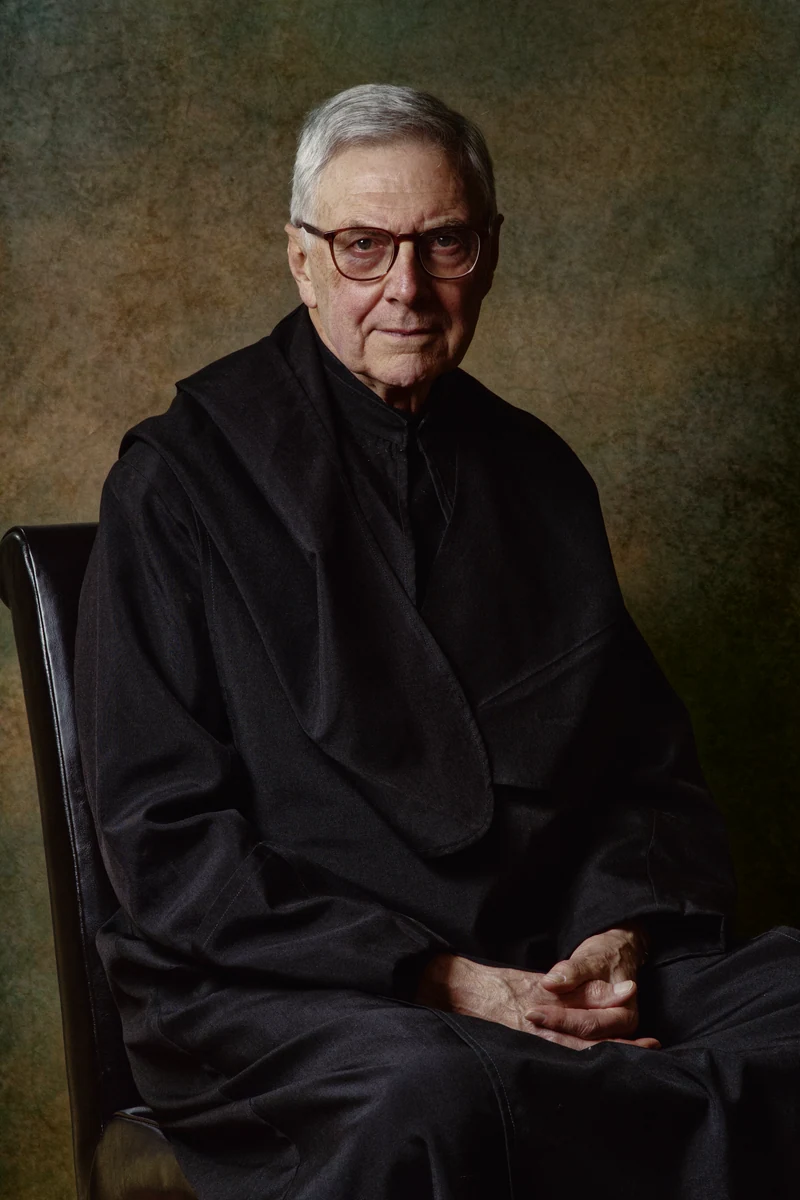
Abbot Mark Barrett
Though baptised as an infant, as was common in his generation, Abbot Mark did not truly embrace the Catholic faith until his late teenage years, just before starting university. He describes this as an "intellectual conversion"
During his sixth form years, his school's Christian Union, mainly led by protestants at the time, organised a debate on the identity of Jesus Christ. When asked to propose this motion, Mark’s response was unexpected and despite not being Christian at the time, he chose the more challenging position of defending Jesus as the Son of God.
“I'd much rather construct an argument for the other side, because that's much more challenging” he explained.
This debate became the catalyst for a deeper investigation of Christian faith. Abbot Mark underwent a process of thoughtful reflection that ultimately led him to become convinced that the claims of Jesus Christ recorded in the Gospels were well-founded. This intellectual journey culminated in his formal reception into the Catholic Church through confirmation.
His first encounter with Worth Abbey, which would later become his spiritual home, was driven by an unexpected source of inspiration: architectural interest. He had seen black and white postcard photographs of the abbey's interior that captured his attention. His first visit to Worth Abbey occurred at night, and this timing proved significant. The combination of the powerful liturgical space and the striking nighttime lighting left a profound impression on him.
“I thought it was very powerful. I still think it's very powerful irrespective of the time of day”
During his student years, he made multiple visits to Worth Abbey, eventually deciding to spend time there as part of the youth community. The transition to becoming a monk wasn't immediate but followed a structured process. He went through several stages, including postulancy and noviciate, before taking simple vows and ultimately making his solemn vows. This process involved not just his own discernment but also required the community's input in determining his suitability for monastic life.
Three and a half years ago, Mark's journey took another significant turn when he was elected as abbot of Worth Abbey. In this role, he faces the complex challenge of balancing dual responsibilities: serving as both a spiritual leader for the monastic community and overseeing the monastery's educational activities.
Abbot Mark explained that his leadership position requires him to navigate the distinct and at times competing demands of his role. On one hand, he is responsible for guiding the monastic community as its spiritual leader. However, he also oversees the operations of an independent school, which brings the challenges of managing a complex 21st century institution.
Balancing the needs and priorities of the monastic life with the operational requirements of running an educational organisation can be a delicate task. Abbot Mark acknowledged that these two realms - the sacred and the secular - are not always an obvious fit, and finding the right equilibrium is an ongoing responsibility of his position.
Abbot Mark has identified several critical strategic challenges that the monastic community must address in order to ensure its sustainability. These include declining vocations, financial pressures, leadership succession planning, and the maintenance of the monastery's facilities. To proactively tackle these issues, Abbot Mark has begun actively engaging with potential newcomers, seeking to inspire interest in the monastic way of life. Additionally, he is exploring ways to delegate certain operational responsibilities to staff and volunteers, rather than relying solely on the monastic community.
“I'd much rather construct an argument for the other side, because that's much more challenging”
11
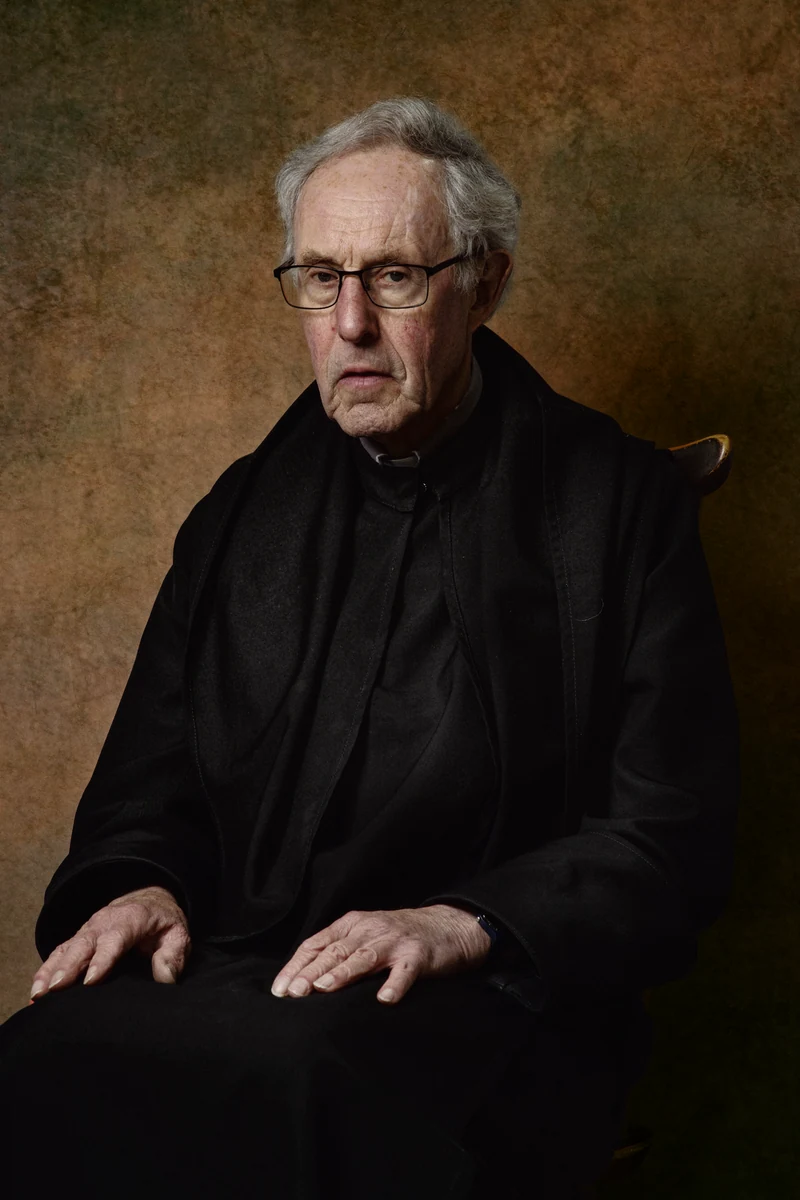
Fr James Cutts
Fr. James’s journey to monastic life began with a sense of clarity when he encountered the Worth Abbey community. After initially working as a teacher, he decided to embrace the monastic life by taking the Benedictine habit. His time in the monastery brought him happiness, but after four years, he reached a crossroads: whether to remain in the monastery for life or to pursue a career and a family. After much thought and prayer, the decision came suddenly, and Fr. James chose to remain in the monastery, a decision he has upheld for over 50 years without regret.
Fr. James’s faith influences every aspect of his life, from his daily actions to his decision-making. His guiding principle is to follow the Good Spirit, striving to choose what is right over what is wrong, though he acknowledges that he doesn’t always succeed. Nevertheless, his faith serves as a constant moral compass, helping him navigate life’s choices with integrity.
Reflecting on how his faith has transformed him, Fr. James is humble, suggesting that others are better placed to judge his personal growth. However, he believes that living in a Benedictine monastery and following God’s guidance has made him a better person than he would have been otherwise.
Certain texts and teachings hold particular significance for Fr. James. He resonates with the words of D.H. Lawrence: “The heart of life is implacable in its kindness,” as well as the powerful message from One Corinthians 1:18: “For the message of the Cross is foolishness to those who are perishing, but to us who are being saved it is the power of God.”
Looking to the future, Fr. James hopes for continued growth in his faith. He desires to become more confident and secure, ready to face whatever challenges lie ahead, and to deepen his love and compassion for his fellow monks. His vision for the coming years centres on spiritual growth, a deepened sense of community, and a steadfast commitment to the monastic life.
“The heart of life is implacable in its kindness”
12
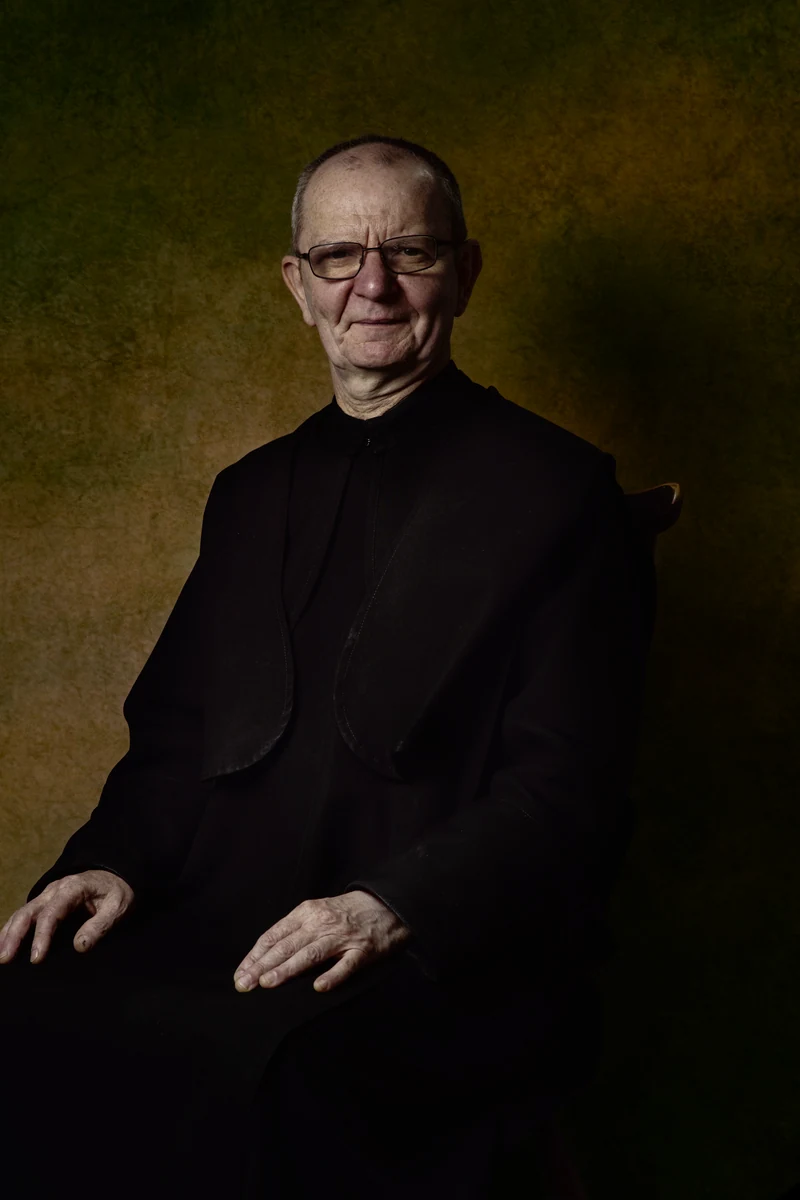
Rev Dom Aidan Murray
Fr. Aidan’s path to monastic life began in March 1968, during his first year studying Chemistry at Imperial College. Invited to Worth Abbey for a weekend with other male students, he found the visit transformative. Although it would take four years for him to return and ten before fully embracing monastic life, the experience planted a seed that grew quietly but persistently, eventually leading him to join the monastery at age 28.Fr. Aidan’s faith deeply influences his daily life and decision-making.
Fr. Aidan integrates his faith visibly into his surroundings. Living in Kemptown, Brighton, he regularly wears his habit when around town; this often sparks conversations about faith and the Benedictine way of life. His role at St. John the Baptist’s Church and Community Hub, "The Fitz," extends this outreach, where he and two other monks (the Monks in the City community) provide a space for prayer and reflection to both the parish and the wider community.The talks and programs offered invite others to encounter the monastic wisdom of St.
Benedict, offering spiritual guidance to people from various walks of life.The Benedictine principles of obedience and community life have shaped Fr. Aidan over time. Though he admits that accepting decisions and initiatives he doesn’t always agree with is part of the discipline of monastic life, he hopes these experiences have made him more tolerant, compassionate, and understanding.Several sacred scriptures resonate with Fr. Aidan, such as the invitation of Jesus in the Gospel of John to “come and see,” and the moving passage from Matthew 25:37-40, which reminds him that whatever one does for the least of their brothers, they do for Christ.As Fr.
Aidan looks towards the future, he reflects on the later stages of his spiritual journey. Now in his mid-seventies, he envisions this time as an opportunity to deepen his understanding and compassion. He likens this phase of life to a “Christian Sanyasa” or the “afternoon of life” in Jungian terms, where maturity and old age offer a chance for further spiritual growth and wisdom.
13
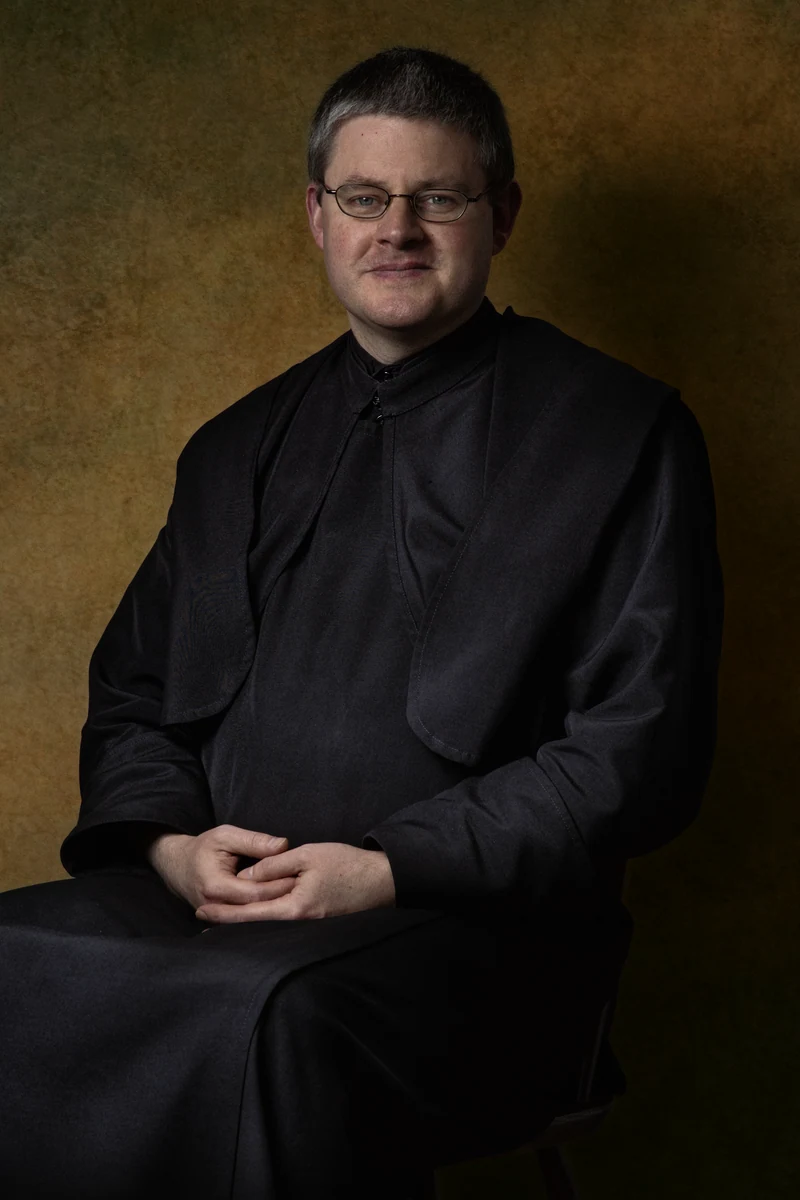
Br Anthony
Br. Anthony’s path to monastic life began with a profound connection to the Rule of St. Benedict and a compelling sense of community he observed at Worth Abbey.
His first visit to the monastery at 18 left him with an appreciation for the monks' humanity and their authentic approach to faith. Seeking a similar path, he later deepened his understanding of Christian community life by living alongside five monks in East Dulwich. Despite his early calling, he was advised to explore secular life first, and it was 17 years before he returned to Worth Abbey, still feeling a steady pull toward the monastic life. This enduring sense of purpose, alongside encouragement from the community, affirmed that this was his true calling.
Br. Anthony’s faith directs his everyday actions and decisions, striving to live for God rather than himself. He reflects on Scripture daily, focusing on ways to bring the Kingdom of God into the lives of others through small, ordinary acts rather than ambitious projects.
He believes that this approach to faith is achievable for anyone, anywhere, and is centered around genuinely listening and responding to others.
The monastic life has transformed Br. Anthony’s sense of self-reliance and need for external affirmation. He feels more secure in the knowledge of being known and loved by God, finding strength in this connection. He is especially moved by the Rule of St. Benedict’s call to “prefer nothing to the love of Christ,” a guiding principle that he interprets as both a personal devotion to Jesus and a call to express Christ’s love toward others.
Looking to the future, Br. Anthony hopes to deepen his faith, embracing the unknown while relying on God’s mercy. He envisions caring less about “important roles” and focusing more on allowing God to work through him for the benefit of others, embracing faith’s evolution with humility and openness to whatever surprises God may have in store.
“prefer nothing to the love of Christ”
14
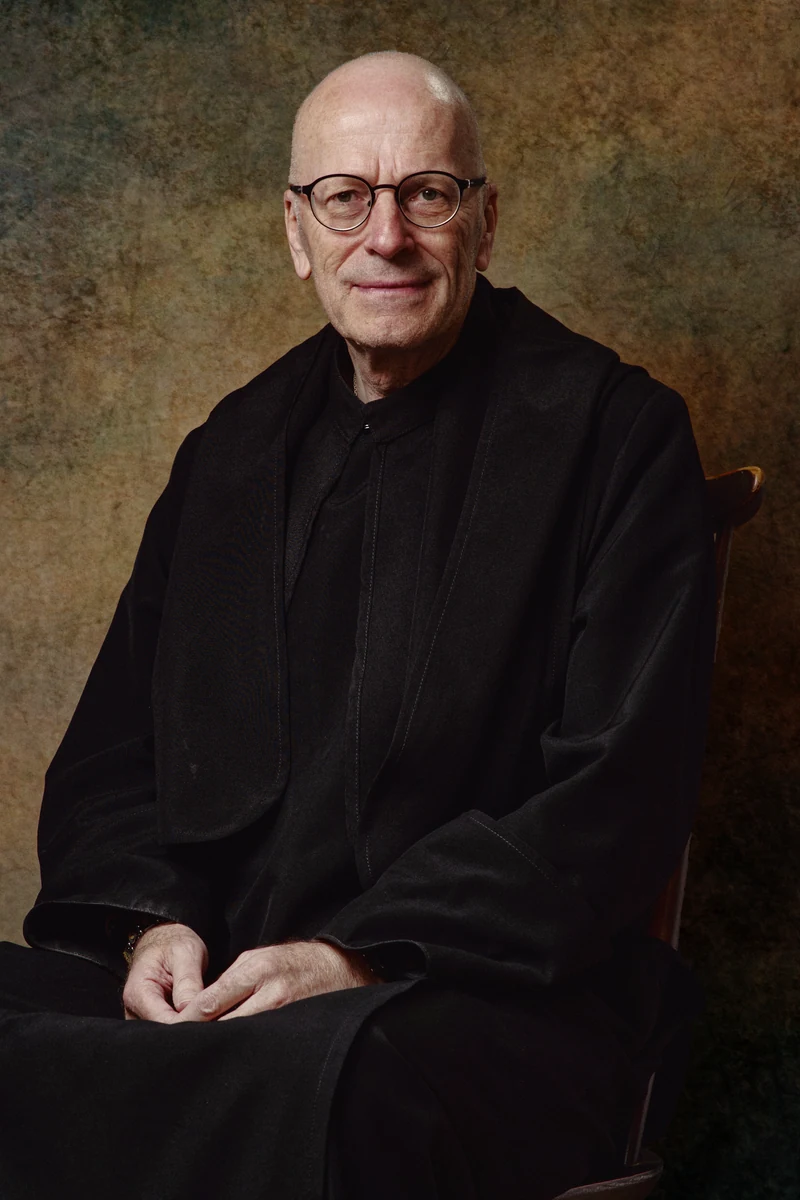
Fr Gabriel
Fr. Gabriel’s journey to monastic life began unexpectedly at 23, after graduating from university and finding himself at a crossroads. Facing decisions about his career and a long-distance relationship of four years, he joined a week-long retreat at Taizé with young adults from the Lay Community of St. Benedict, linked to Worth Abbey.
During this retreat, he witnessed a member of the Taizé community take his Solemn Profession, an experience that unexpectedly stirred a deep attraction to the idea of monastic life. The question of joining Worth Abbey arose when a friend jokingly asked, “So which one of you is going to join Worth?” This question opened a flood of emotions as Gabriel was also contemplating marriage with his girlfriend.
Each time he prayed, he felt drawn towards monastic life, but this only caused confusion and inner conflict. He resisted the idea, even turning to the catechism to rationalise that he was not called to the monastery. When he phoned his girlfriend midweek, she sensed his inner turmoil, and jokingly said, “At least it’s not as if you’re thinking of joining the monastery.” His silence spoke volumes, and she realised the depth of his struggle, intensifying his emotional conflict. The pressure and uncertainty became overwhelming.
Seeking clarity, he confided in friends on the retreat, who listened without judgment. In one conversation, he noticed himself speaking about his relationship in the past tense. Struck by this revelation, he turned to prayer, acknowledging his confusion and surrendering, saying, “If this is what you want me to do, then okay.” With this acceptance, his emotional turmoil disappeared, replaced by a profound peace and certainty that this was God’s call for him. In that moment, Gabriel’s path to monastic life became clear, setting him on a journey of commitment to God.
In his daily life, Fr. Gabriel’s faith provides the foundation for everything he does, influencing his choices and interactions. He describes his faith as the “bedrock” on which he walks, guiding him to prioritise compassion, integrity, and love. Through this lens, he approaches decisions with an openness to God’s direction, striving to consider others’ needs before his own. His faith fosters a sense of moral clarity, helping him remain grounded in values beyond his own desires. This perspective, he notes, is open to anyone, not just monks, as a way to bring goodness to the world.
“Faith is the bedrock on which I walk, and I attempt to use it as the lens through which I approach the questions of life” he says.
Faith has transformed Fr. Gabriel on a personal level, bringing him joy and an enduring sense of self-worth. He previously sought validation from peers, but now finds security in knowing he is valued by God. This shift has granted him inner peace, as he no longer relies on others’ opinions for self-assurance. Instead, he aims to live in alignment with God’s love, finding fulfilment in a life rooted in spiritual integrity.
Fr. Gabriel’s journey is also shaped by sacred texts that emphasise love and service. One that resonates particularly with him is from Matthew 22:36-40, where Jesus says the greatest commandment is to “love the Lord your God with all your heart,” followed by “love your neighbour as yourself.” For him, these teachings offer a guiding principle, reminding him to love selflessly and live in service to others, embodying Christ’s compassion.
Looking to the future, Fr. Gabriel embraces the mystery of faith, entrusting his path to God. Having already joined a monastery, he believes the details of his spiritual journey will unfold in God’s time, and he is ready to accept whatever may come. Rooted in his vocation, he sees each stage as a new opportunity to deepen his faith, love, and dedication to monastic life.
“So which one of you is going to join Worth?”
15
Fr Rod
Father Rod’s journey to monastic life began in a close-knit Catholic family with six children, where early experiences in faith shaped his understanding of Christianity as call into a living relationship with Jesus.
"I can remember, as a little kid, having a strong sense of a relationship with the Lord and Our Lady” he recalls.
Though he felt a pull toward the priesthood at age 10, he pursued studies in architecture after completing his A-levels. Yet, while studying architecture at Brighton, Father Rod became involved with the chaplaincy at Sussex and Brighton universities, reconnecting with his faith.
A visit to Worth Abbey—where he encountered a vibrant community of young, engaged believers—had a profound impact on him, prompting him to return regularly to participate in monastic liturgies and deepen his spiritual life.
During a year spent at Worth Abbey, Father Rod felt a renewed calling toward the priesthood and the monastic life. He made the decision to complete his architectural qualifications, yet he continued discerning his vocation, ultimately joining the monastery as a novice in 1980.
After a period of formation, he took his simple and solemn vows and was ordained a priest in 1985. Father Rod has since served in many roles within the monastic community, including teaching, parish work, and overseeing the monastery’s retreat centre, where he engaged directly with many visiting laypeople.
Currently, Father Rod is a Catholic chaplain to Sussex University and oversees the pastoral care of St Mary Magdalen Church in central Brighton. His chaplaincy role involves supporting university students and engaging with a diverse community seeking spiritual guidance and support. St Mary Magdalen itself serves as a sanctuary, offering a peaceful space for reflection and prayer in the heart of the city. .
"While I was a student in Brighton, it was the university chaplain at the time who suggested I went to visit Worth and then all these years later, I now find myself responsible for that very same role!” he reflects.
Father Rod is particularly passionate about making churches accessible to those on the fringes of faith or those seeking a respite from the fast-paced demands of modern life.
Looking forward, Father Rod sees the future of monastic life evolving beyond the traditional model. He believes that smaller, flexible monastic communities in urban settings can provide spiritual resources to a wider audience and address the challenges facing contemporary believers.
While acknowledging that large, institutional models of monasticism may struggle to sustain themselves, he remains optimistic about the adaptability of the Benedictine tradition and its enduring relevance.
Father Rod’s story reflects a balance between personal growth, service, and a deep commitment to the spiritual life, illuminating how monastic life can remain relevant, welcoming, and inspiring in a modern, ever-changing world.
His journey from a young Catholic boy with an early calling, to a dedicated monk and chaplain showcases a lifelong pursuit of faith, resilience, and the desire to share something of the richness of life that comes through encountering the living presence of Jesus, as 'the Way, the Truth and the Life'!
Faith is photographed by Stephan De Quaire at Worth Abbey in Sussex. The stories gathered here are the monks’ own, in the versions they have approved, and they remain theirs. The exhibition is kept out of the search engines.
Anyone photographed for this project — or their community — is welcome to a copy of any portrait: email contemporaryheadshot@gmail.com.